


More Than Best Practices
By: Charlie Robertson
A lot of people think of Return ‘Em Right as just an outreach program on the surface. While giving out free gear, training, and teaching anglers about best release practices is a big part of what we do, there is a lot more happening behind the scenes of one of the greatest restoration programs to ever grace the Gulf region (I’m slightly biased!).
In decades past, best release practices were sometimes required through regulation with limited practical science behind them. In 2008, a mandatory venting tool requirement went into effect in the Gulf. It was repealed in 2013 when it became clear that anglers without proper training on how to vent fish might be doing more harm than good to the fish they were trying to save.
These types of situations are exactly what programs like RER aim to prevent. Beyond encouraging best release practices, the program funds science that tells whether those practices actually work. Four recently completed studies from Auburn University, Mississippi State University (MSU), University of Florida (UF), and Louisiana Department of Wildlife and Fisheries (LDWF) produced findings every Gulf angler should know about.
Quick Retrieval Matters More Than You Think
What You Do at the Rail Changes Everything
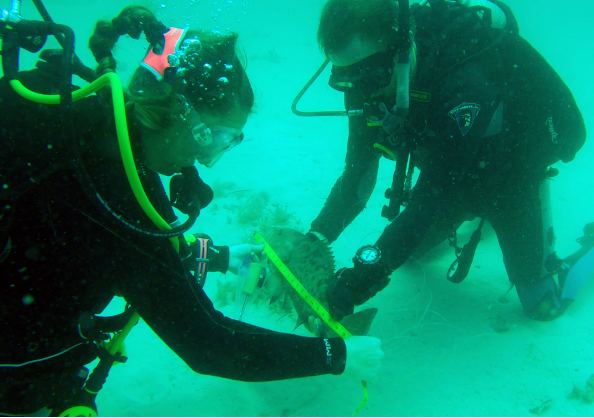
Across two tagging studies, how quickly a fish is retrieved, handled, and returned to the water consistently emerged as one of the strongest factors affecting survival.
In Auburn’s red snapper tagging study, fish retrieved and released quickly, typically within 1 to 4 minutes of handling, showed better condition at release than fish that spent more time out of water.
Fight time also ranked among the more important factors for survival in LDWF’s depredation study, reinforcing that time on the line has consequences beyond just barotrauma. The faster you get a fish off the line and back in the water, the better its chances.
Slow Retrieval Doesn’t Help
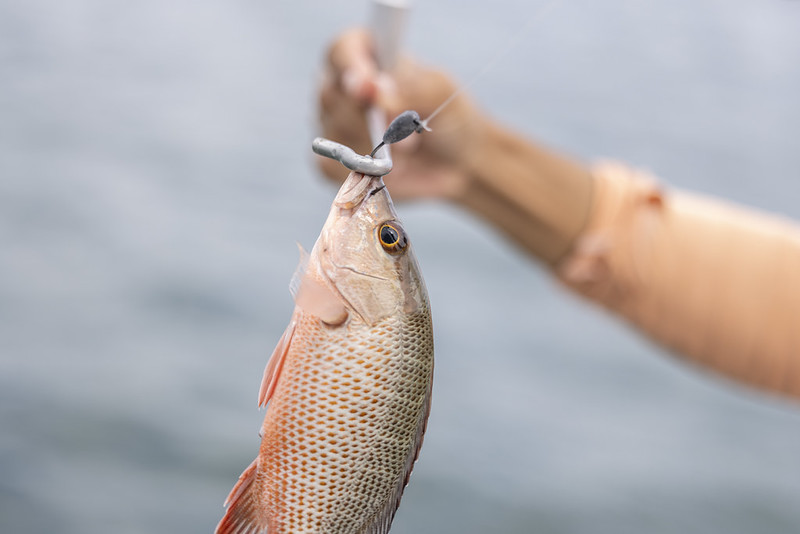
There is a persistent myth among anglers that reeling up slowly gives fish time to equalize pressure on the way to the surface. The science says this is simply not the way it works. Red snapper and many other bottom-dwelling species have a closed swim bladder. The only way for expanding gases to escape is through diffusion across blood vessels, a process that takes hours, not the few minutes of a slow retrieve.
Auburn researchers specifically discourage slow retrieval and encourage short fight times, quick dehooking, and quick return to the water as the best case scenario to improve survival.
Descender Devices Work
Telemetry Data Makes the Case
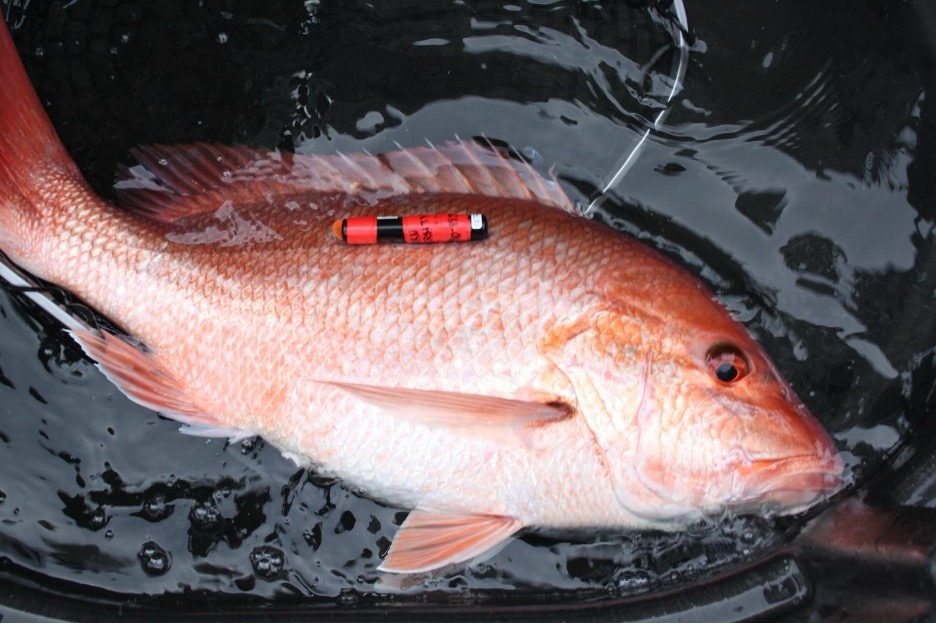
Auburn’s acoustic telemetry results showed clear survival differences by release method: cage-released red snapper survived at 100%, descending device-released fish at 84%, and surface-released fish at 47%.
Conventional tagging alone in the same study did not detect significant differences in recapture rates between release methods, which is a good reminder that acoustic telemetry may give a more complete picture of what happens after release.
Depth Determines How Much They Matter
Depth was one of the clearest drivers of mortality in Auburn’s study. Recapture rates dropped significantly at shelf edge sites in the 135-145ft range compared to shallow depth zones regardless of release method.
In shallower water, like the 46-70ft sites in the University of Florida’s gag study, overall mortality was relatively low across all release types. Less depth means less barotrauma.
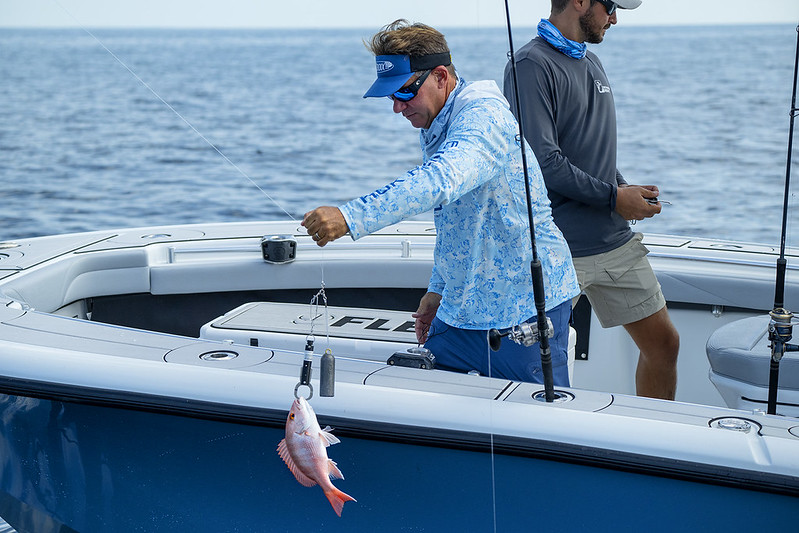
The key takeaway is that descending devices become progressively more important as depth increases. When releasing fish at or near shelf-edge depths, surface release is increasingly a lost bet.
.
The Shark Question? Two Studies Have an Answer
Real Concerns Worth Testing
One of the most common pushbacks Return ‘Em Right hears from anglers is, “If a fish made it up through the predators on the way up, won’t putting it back on a descender just give them another shot at it?” That’s a fair question and might seem to make sense.
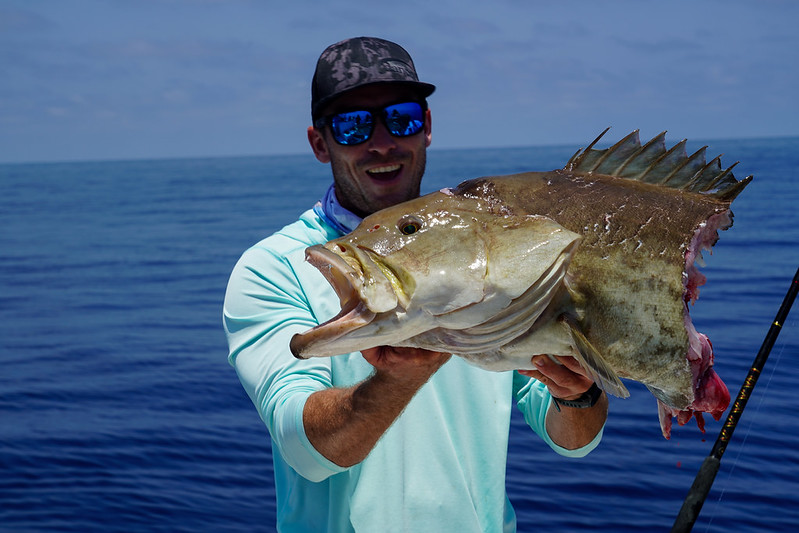
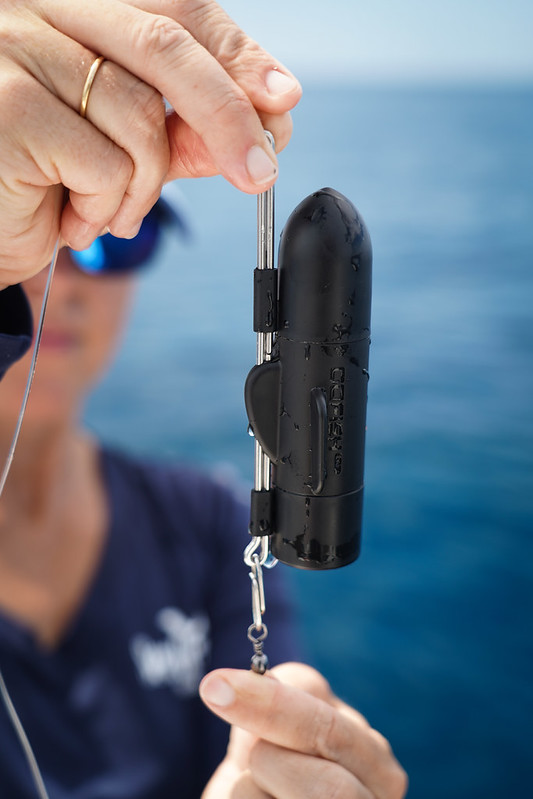
Researchers set out to quantify just how common that happens. Mississippi State’s Dr. Marcus Drymon partnered with 27 charter captains across the Gulf and mounted cameras on descender lines to record what happened on the way down. The LDWF ran a parallel study using underwater cameras off the coast of Louisiana that focused on gray triggerfish, greater amberjack, and red snapper near oil platforms and artificial reefs.
Turns Out, Depredation on Descending Devices is Rare
Dr. Drymon’s Gulf-wide dataset covered 987 recorded descents across all five Gulf states. Out of those, exactly three fish were depredated on the way down. Only three. All were red snapper off Louisiana’s coast and all were taken by sharks. The overall depredation rate on descending devices was less than 1%, however, additional mortality may occur after release.
The LDWF study covered 499 successful releases and found depredation in just 1.6% of descents, even though predators were present for nearly 59% of releases and actively interacting with descended fish in about 33% of cases. Predators were around, but they were not observed taking fish off descending devices.
Both studies found the same thing: depredation on fish released with descender devices is quite rare. LDWF concluded the biggest driver of predator interaction was not the device type or species descended, it was how many predators were already present. If predators are gathering while fishing, moving spots, when possible, is the best option.
The Bottom Line
The science points towards quick handling, using the right tools, knowing your depth, and not worrying too much about the sharks on the way down. The best release practices that Return ‘Em Right encourages are guided by anglers, but grounded in science.
The program is proud to support the kind of research that gives anglers and managers confidence that the recommendations we make are backed by real data.
To learn more about how we as anglers can enhance the survival of reef fish, visit returnemright.org.
Disclaimer: The findings presented here are based on final reports submitted to Return ‘Em Right. Peer-reviewed publications from these studies are forthcoming.