

Story originally published in Texas Saltwater Fishing Magazine.
By: Nick Haddad
Separating Fact from Fiction.
Return ‘Em Right has been publicly operating for over four years now. In that time, and across countless presentations, tournaments and boat shows, I’ve heard it all when it comes to barotrauma and best release practices.
But when it comes to catch and release survival, facts matter more than opinions.
Let’s break down some of the most common myths about barotrauma, venting reef fish, and descending devices — and what the science actually says.
What Is Barotrauma in Reef Fish?
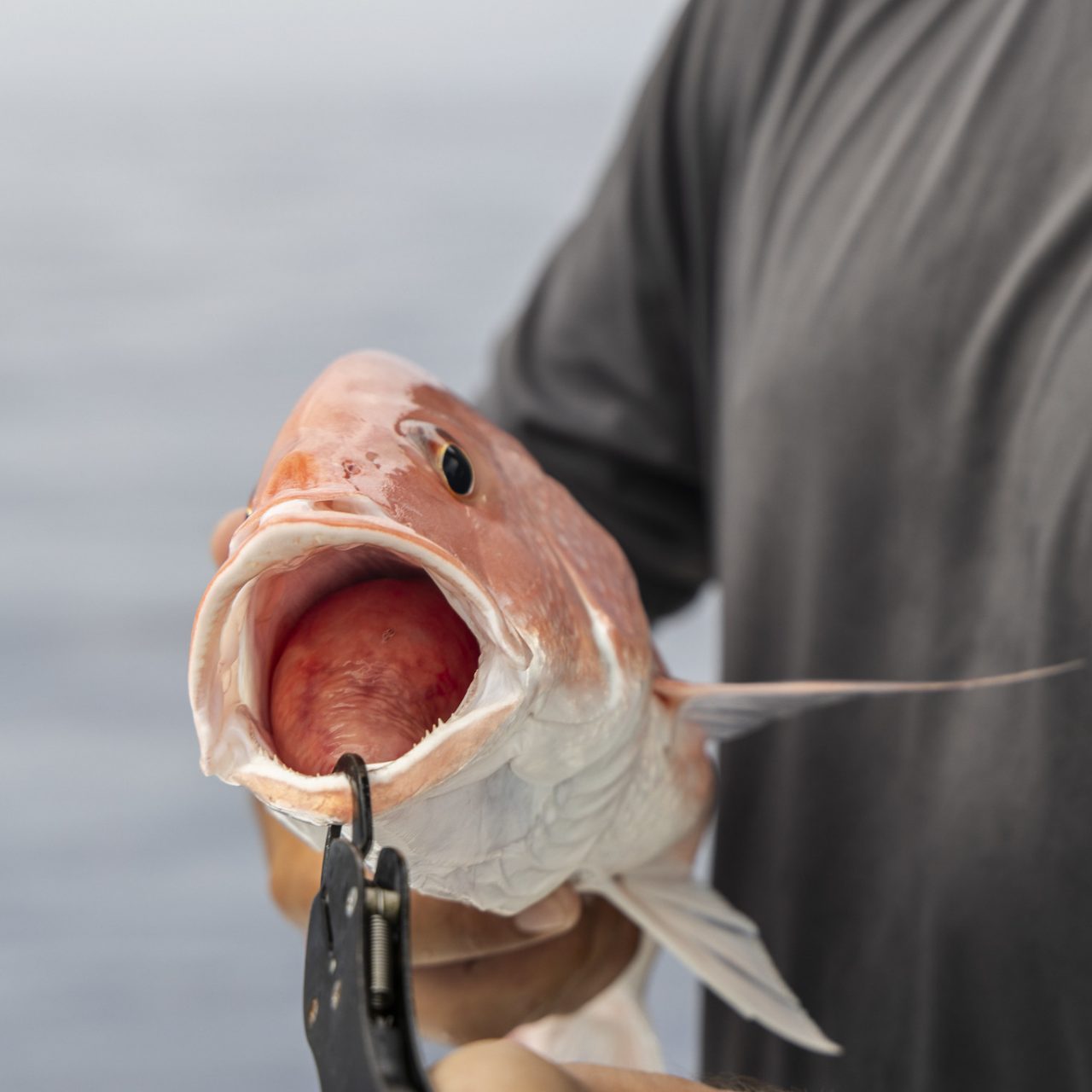
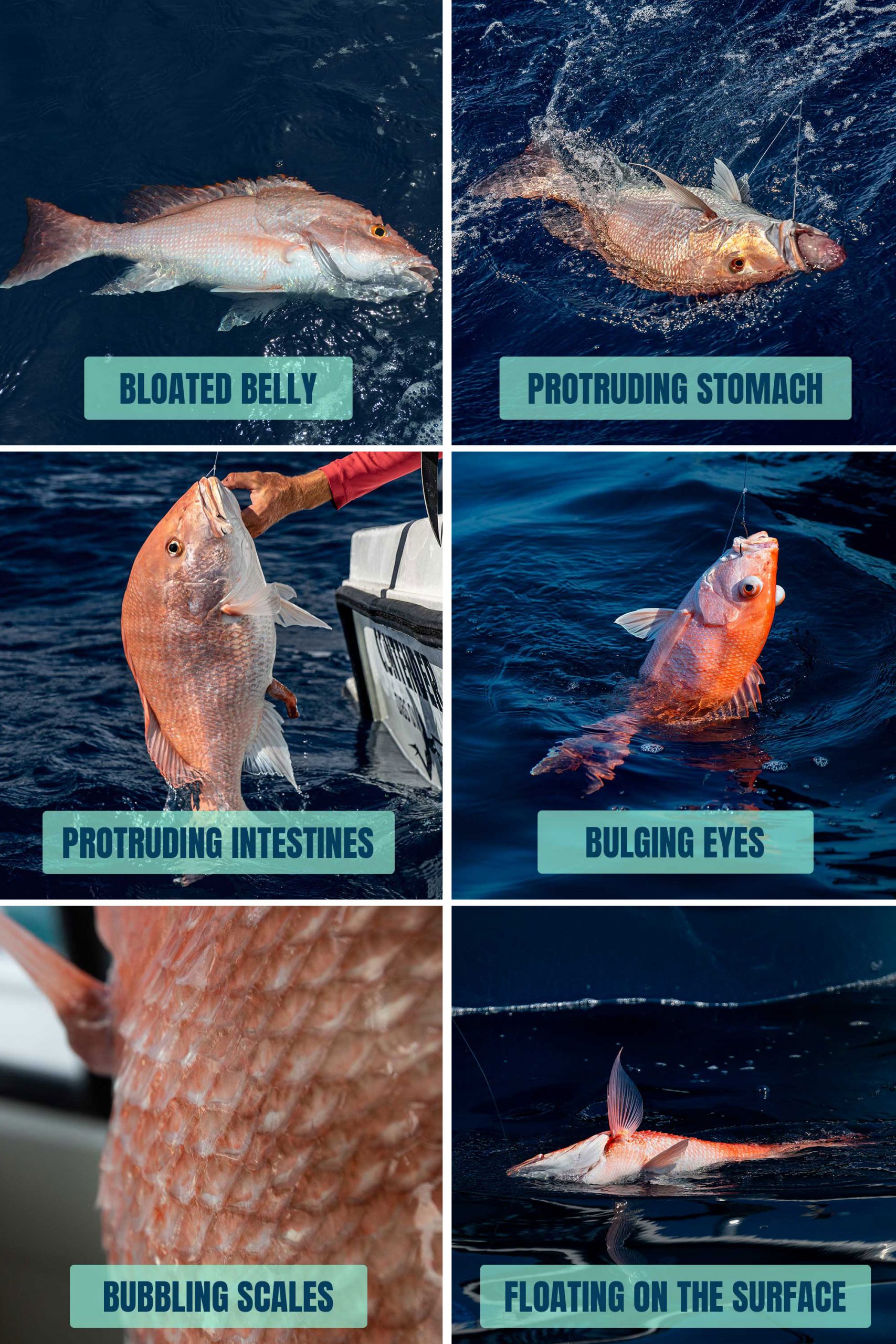
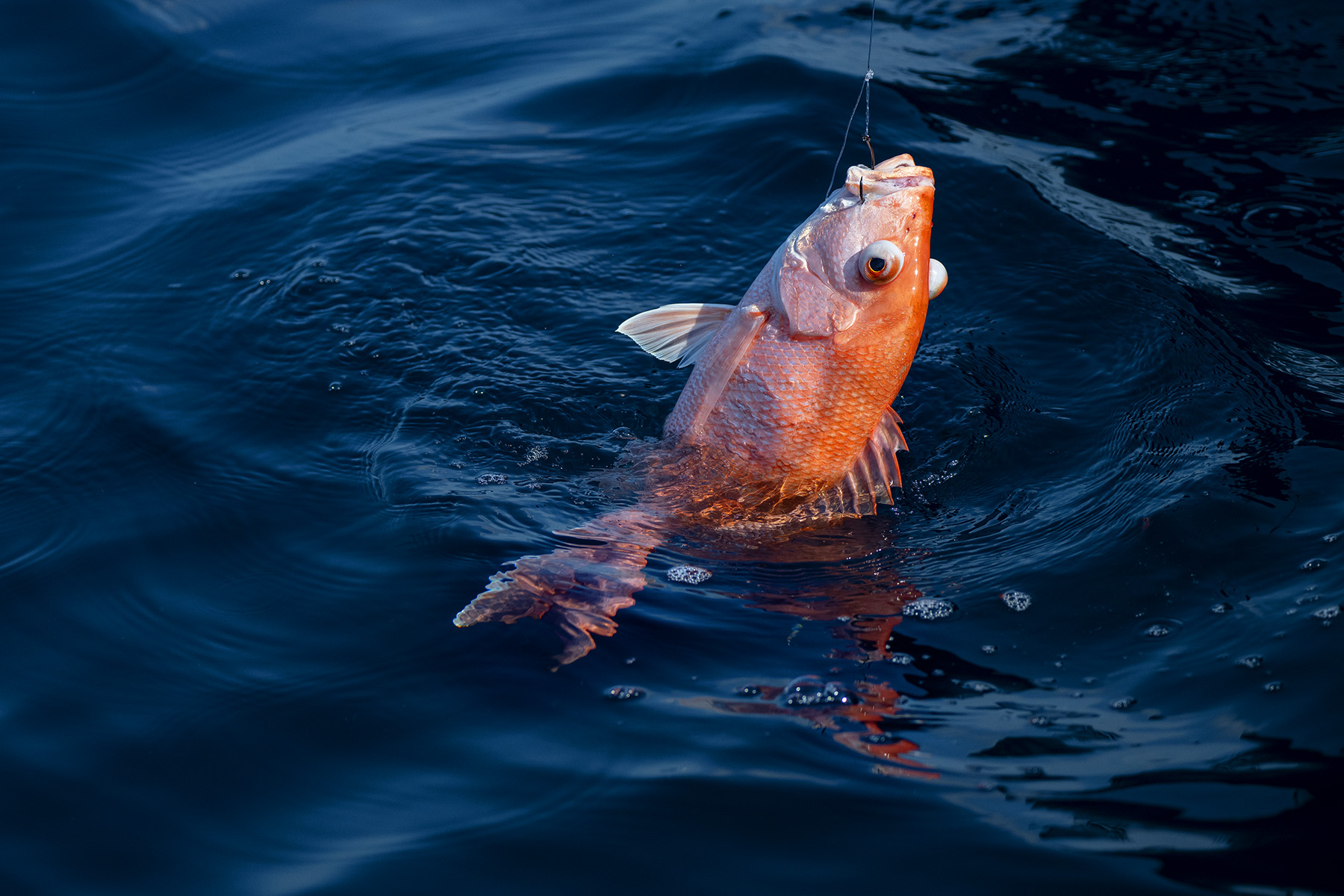
Barotrauma occurs when reef fish are brought to the surface from depth. As fish are reeled up, the swim bladder expands — often displacing organs and leaving fish bloated and unable to swim back to depth.
This can cause:
● Bulging eyes
● Bloated appearance
● Stomach protruding from the mouth (stomach eversion)
● Inability to swim back down
● Bubbling scales
Myth #1: “Just Pop the Swim Bladder Sticking Out of the Mouth”.
This prevalent misunderstanding about barotrauma has circulated for years. Most fishermen are aware that reef fish have a swim bladder that expands when reeled to the surface from depth. Many assume the organ sticking out of the mouth of a fish is the inflated swim bladder, but in reality, the swim bladder expands internally and pushes the stomach out of the mouth of the fish. This is known as stomach eversion.
Anglers may see some stomach contents expelled upon ascent or near the mouth of the fish when stomach eversion occurs. Another example is when a snapper bites their own everted stomach “deflating” it, yet there is still air in the body cavity from the swim bladder expanding. You never want to pop the stomach coming out of the mouth as it can do more harm than good for the fish and doesn’t successfully release the gases in the body cavity.
The Bottom Line.
If you choose to vent fish (although descending is preferred under most scenarios), ensure you are venting the correct spot behind the pectoral fin!
Myth #2: “Descending Devices Spoon-Feed Sharks and Dolphins”.
This argument primarily arises from anglers having their catch eaten while fighting it to the surface, commonly referred to as depredation. If you are an avid offshore angler, more likely than not you’ve reeled up a half of a fish before.

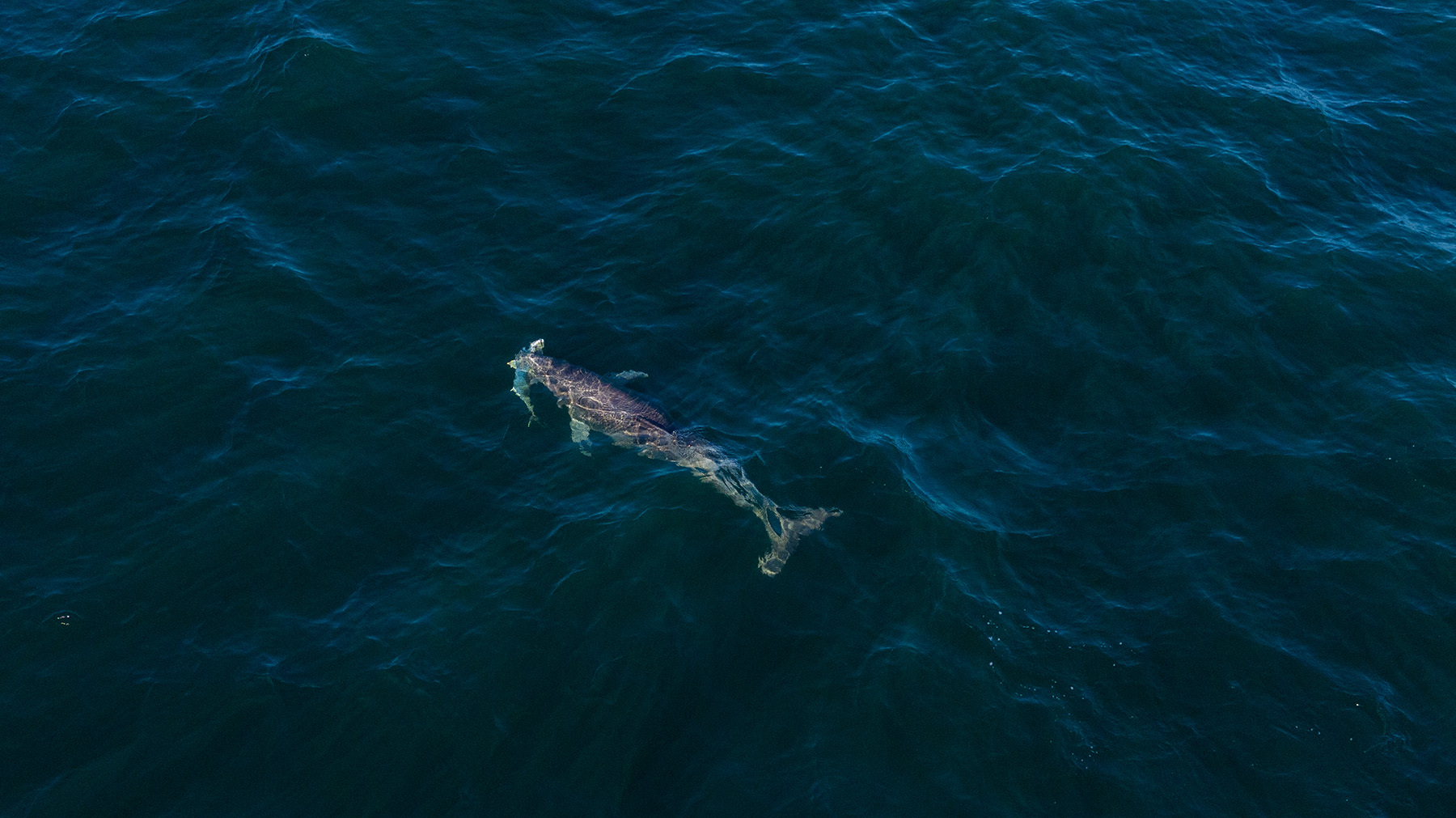
The simple truth is that a fish being descended acts nothing like a fish fighting for its life on the way up. Sharks are attracted to the vibrations and struggle of a fish fighting to survive and get off the hook. Spearfishermen are aware of this as you are more likely to have your fish eaten by a predator when it is struggling on the shaft rather than when you gain control of the fish.
If the subjective evidence isn’t enough for you, let’s look at some data.
What the Research Says About Depredation:
Depredation of Demersal Reef Fishes Released with Descender Devices is Uncommon off North Carolina, USA (Runde et al. 2022).
-
- 1,176 non-videoed descents: zero devices lost to predators.
- 114 videoed descents: predators observed 7 times, zero depredation events.
Depredation on Descender Devices: A Gulf Wide Investigation (Mississippi State University 2025).
-
- 987 descended fish on camera.
- Predators were seen on the surface during 114 of the descents and seen on camera 44 times.
- Only 3 fish were eaten off a descending device, a rate of less than 1%.
Our Own Evidence!
-
- We’ve sent a GoPro down hundreds of times while descending and have not had a predator attack a fish on descent yet.
The Bottom Line.
Letting a fish float off on the surface is spoon-feeding predators and a vented fish still has to swim wounded and tired past predators to the bottom to survive. Don’t knock descending devices until you give them a shot!
Myth #3: “That Fish Is Dead Anyway”.
Our last myth comes from the gruesome image of a fish fully blown up from barotrauma. When anglers see the eyes bulging out of the head or the stomach protruding from the mouth of a fish, they often think it has zero chance of surviving release. In reality, a fish that looks lifeless at the surface often may have a great chance to survive release to grow, spawn and contribute to the future of the fishery. We have no way of telling on the surface whether barotrauma was fatal for a fish.
Acoustic Telemetry Studies:
Researchers tag fish with acoustic transmitters to track their movements after release and document long-term survival.
-
- Runde et al. (2021): Caught and tagged 44 red snapper in an average depth of 120 feet. Found that roughly 87% survived release after being descended.
- Wegner et al. (2021): used acoustic telemetry to evaluate long-term survival of rockfish off California and found “… that physoclistous fishes captured at depths up to ~180 meters (590 feet) and experiencing extreme barotrauma can survive if properly released using a descending device, and that increased capture depth for such deeper-dwelling species does not necessarily increase mortality.”
These studies show that even fish experiencing severe barotrauma can survive — if released properly.
Mark-Recapture Research.
Tagging fish with simple dart tags and evaluating which ones are recaptured provides valuable information on which release types are most successful.
-
- Stallings et al. (2023): Red snapper and red grouper were 2–2.5 times more likely to survive when descended to 20 meters compared to venting. Fish descended to only 10 meters had survival rates similar to vented fish.
The Bottom Line.
Not every fish will survive release but it’s our responsibility to give each one their best shot! Barotrauma can be fatal, but there’s no way for us to tell on the surface.
The Responsibility Is Ours.
With the knowledge and technology we have today, there is no excuse to watch fish float off behind the boat. Not every fish will make it. But it’s our responsibility to give each one the best chance possible. If you don’t know where to start to make this happen, dive into Return ‘Em Right’s training!
The Return ’Em Right program offers a free 15-minute online training covering barotrauma, venting, descending and other best release practices.
Upon completion, eligible Gulf reef fish anglers can receive gear for free by simply covering the cost of shipping and handling.
Visit ReturnEmRight.org to learn more.