

By: Nick Haddad
Mastering the Use of Your Descending Device is Important for Survival
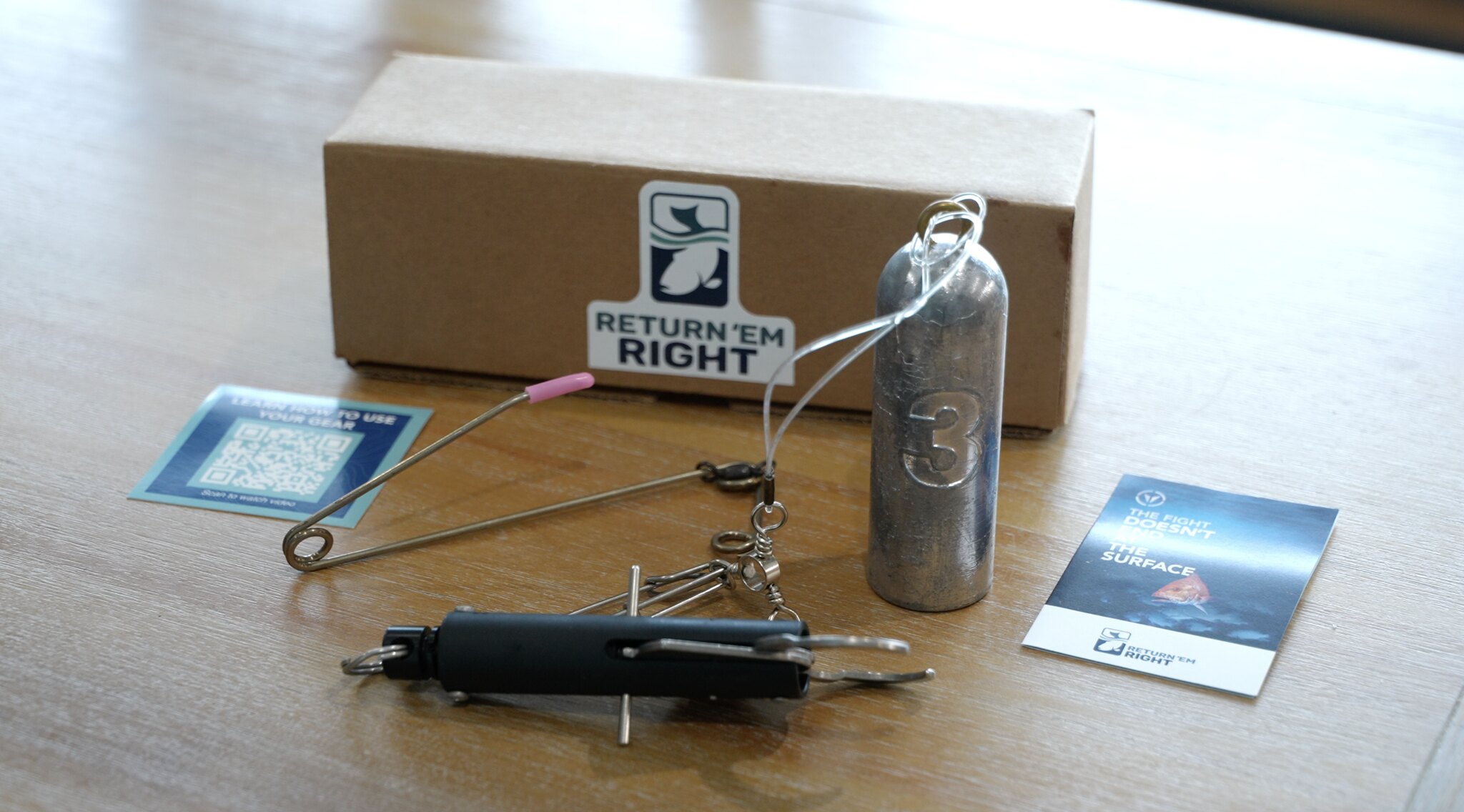
Proper venting and descending device use are often the highlight of Return ‘Em Right education as these are necessary, and sometimes novel, techniques for anglers. Equally important to the survival of released reef fish is minimizing handling and release time. Mastering the use of your descending device will help reduce the amount of time that fish spend out of water and increase their likelihood of survival, while also allowing you to get back to fishing more quickly. In this blog we will cover the top two problems anglers have when using the kit of release gear distributed by Return ‘Em Right.
Problem #1: Difficulty Setting the Depth on the SeaQualizer
A SeaQualizer is a pressure-released descending device that can be set to one of three depths. These devices come in three different styles: the shallow water releases at 30’, 50’ or 70’, the standard (distributed by Return ‘Em Right) releases at 50’, 100’, or 150’ and the deep water releases at 100’, 200’ or 300’. Setting the depth properly is essential to giving fish their best chance of survival as fish need to be carried far enough down the water column to recompress and overcome barotrauma. Sending them close to the bottom may also provide an added benefit by getting the fish closer to the school or structure it came from for protection from predation.
Why This Happens
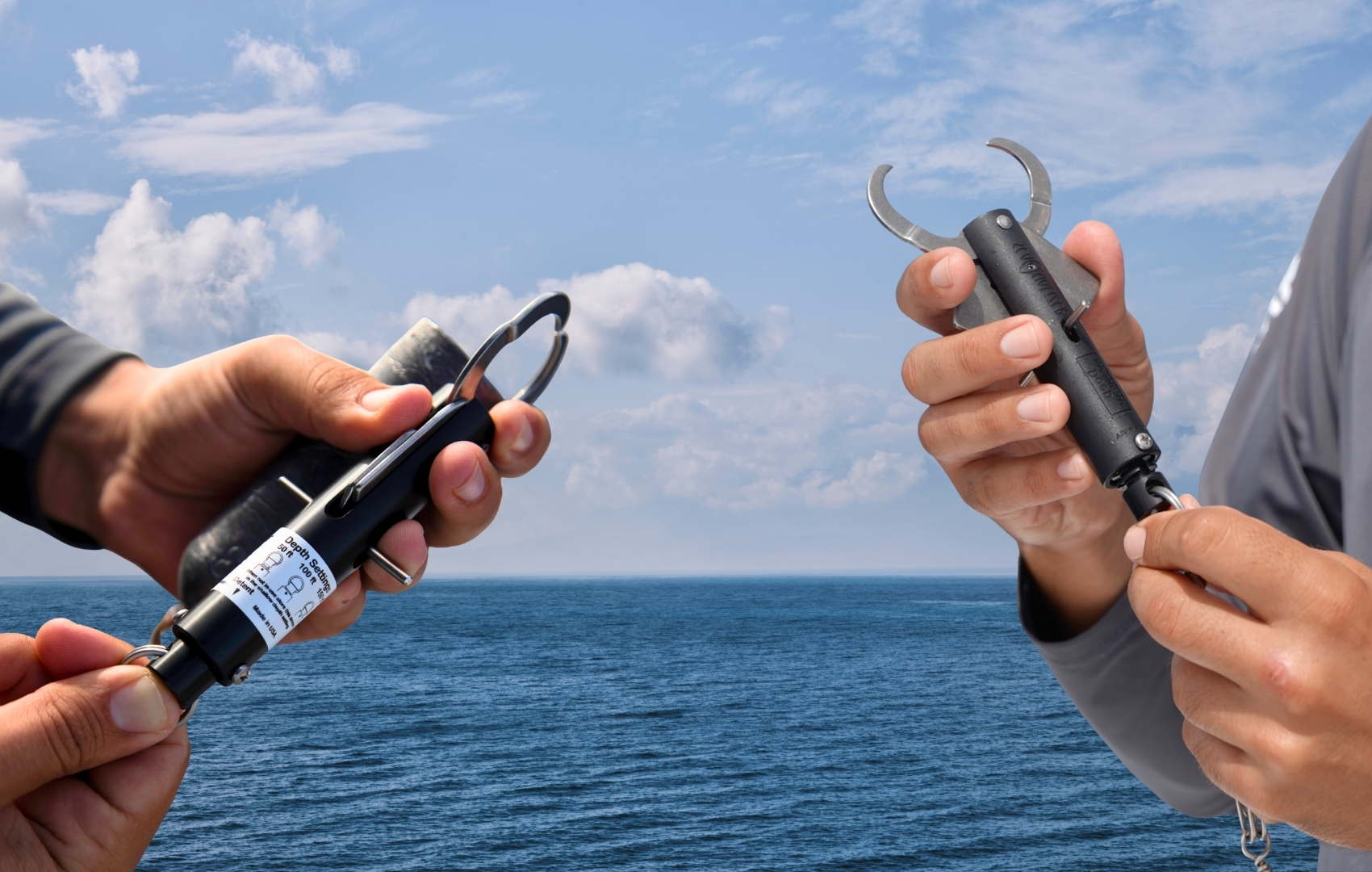
Issues setting the depth on the SeaQualizer are one of the biggest complaints from anglers when using this gear. The old SeaQualizers had a label that showed the depth settings, however, the manufacturer switched to a molded body a couple of years back and the sticker was removed. It is particularly challenging to set the depth because it can’t be changed unless the split ring and screw head are aligned on the bottom of the device. Without the physical instructions, it may feel as though there is nothing to change on the device.
The Fix: How to Set Depth Correctly
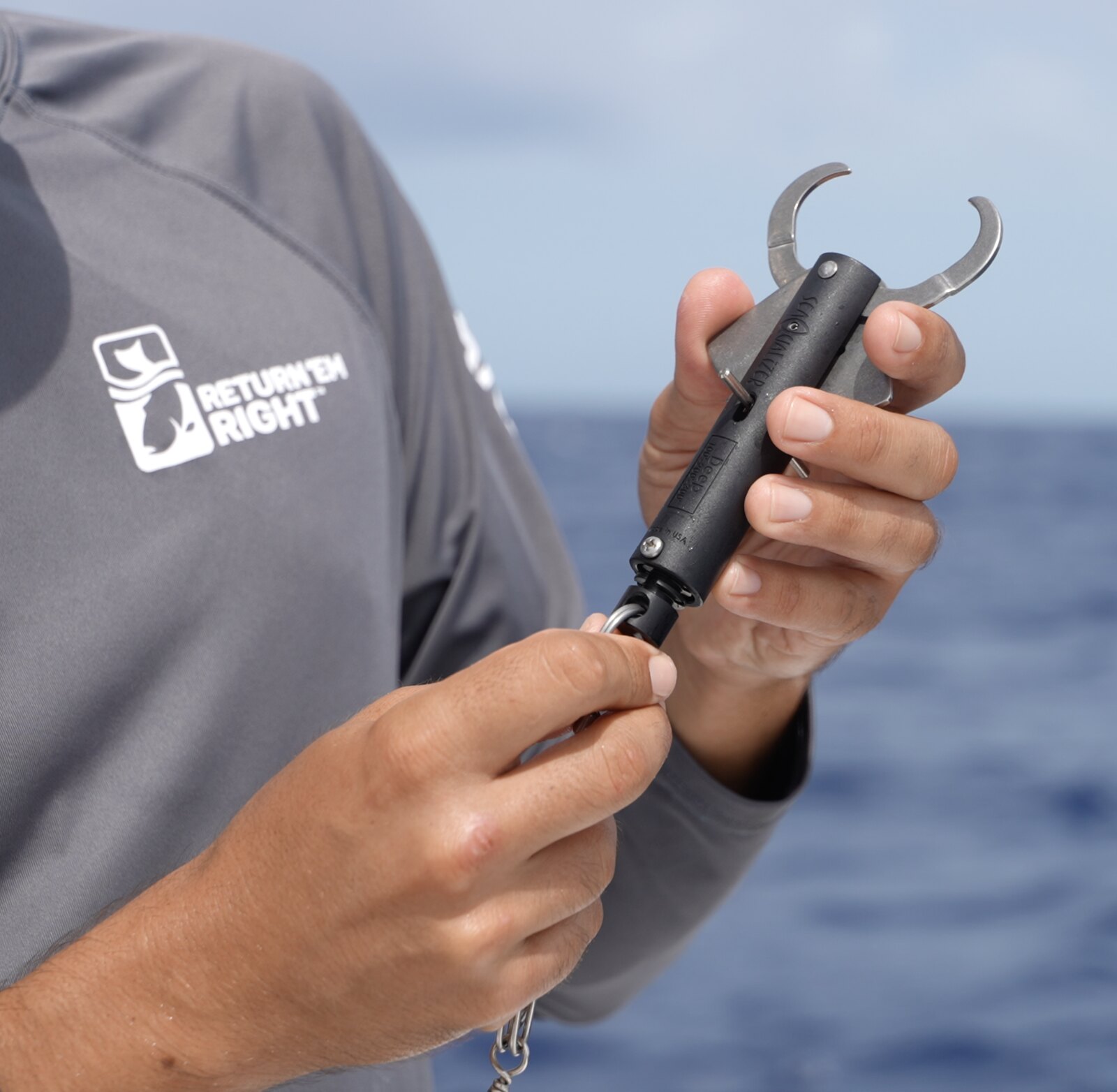
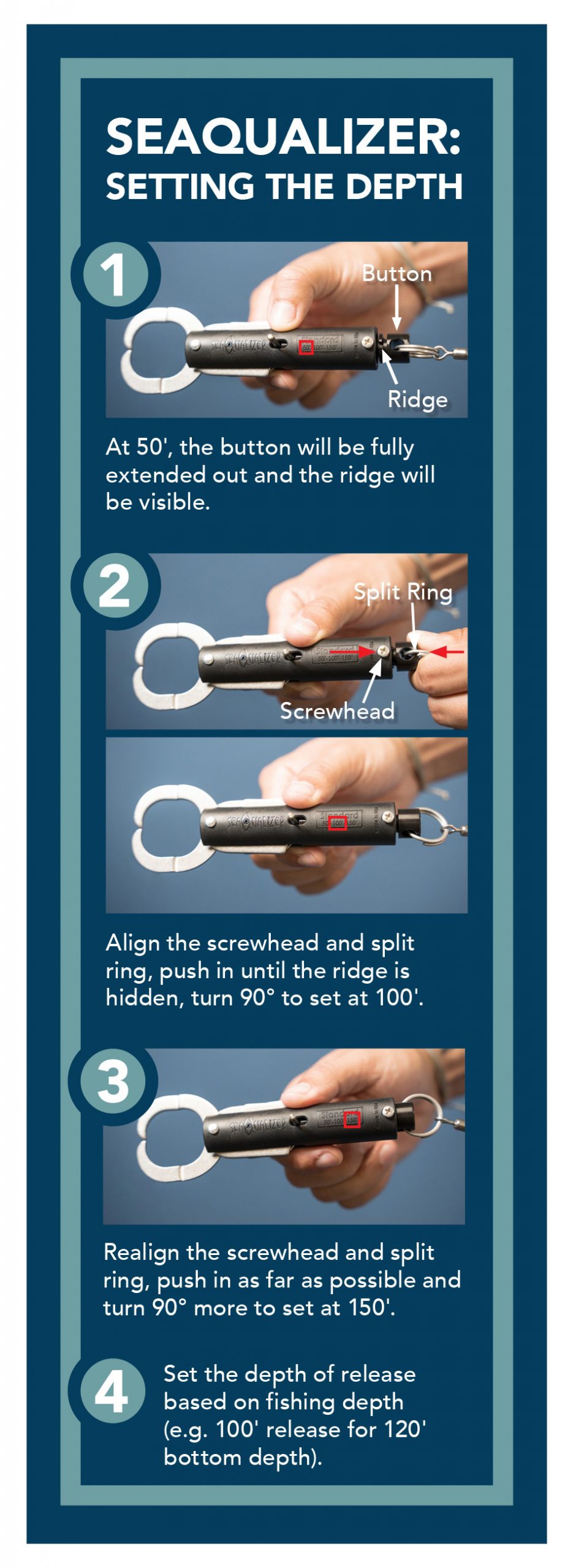
The trick to setting the depth properly is simply a little practice. Start by aligning the split ring and the screwhead. The “button” that the split ring runs through will then pop out all the way. This is ALWAYS the shallowest setting. From there you will be able to push the button in and out and you will see a plastic ring that marks where the middle depth setting is. Push that button in until that middle line barely disappears and turn 90 degrees to lock it into the middle depth setting. The deepest depth setting is then pushing the button all the way in and turning 90 degrees. If you are a visual learner, this video will help explain how to use the SeaQualizer, including setting the depth.
PRO TIP: If you forget which setting is which, simply open the jaws with your fingers and you can feel the difference in pressure that is needed to open the jaws. If it’s harder to open, you are in a deeper setting. The easiest to open will be the shallowest setting (button all the way out).
Problem #2: Using Too Much or Too Little Weight
The second most common issue anglers report experiencing with the Return ‘Em Right kit is that the three-pound weight is either too heavy or not heavy enough.
Why Weight Matters
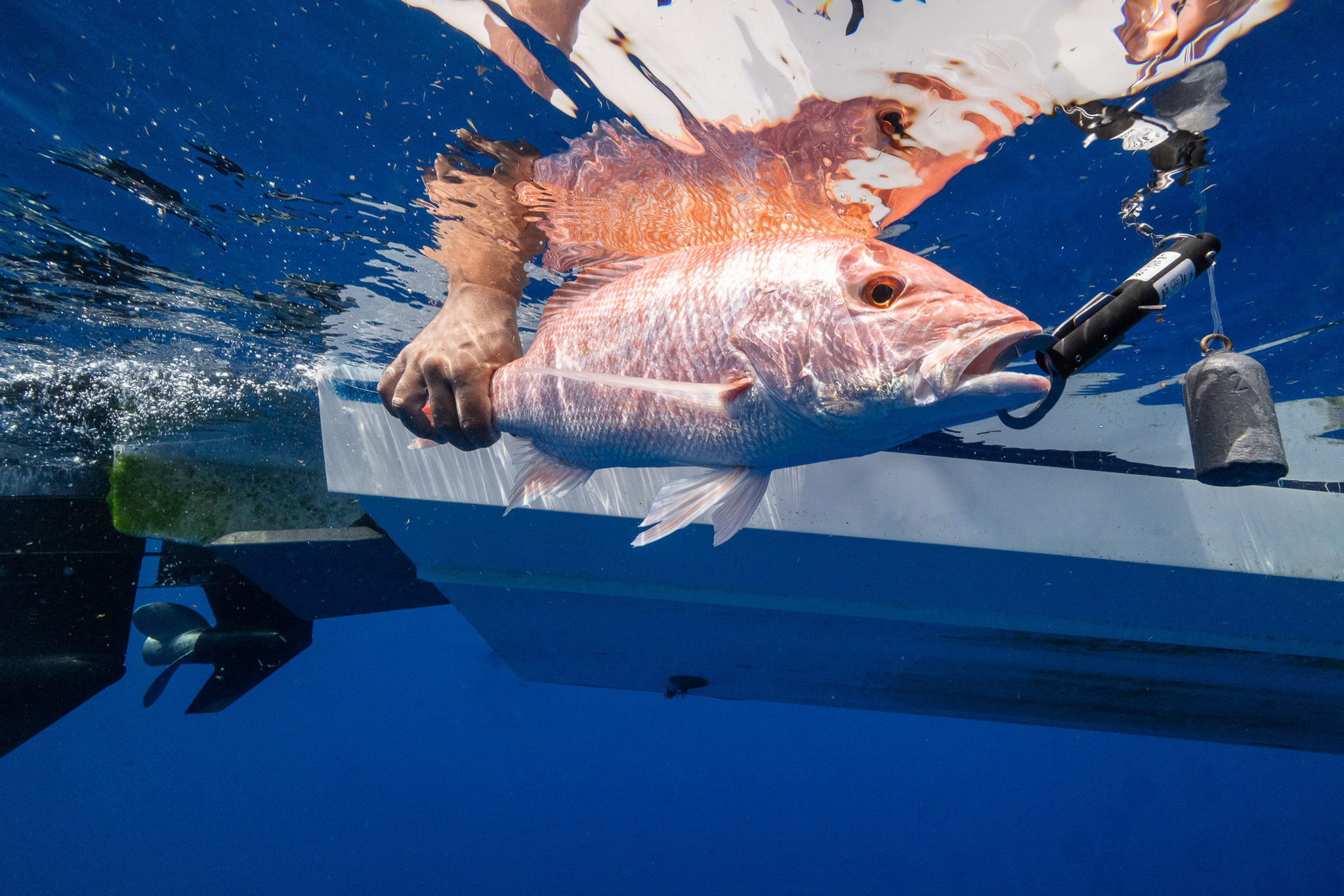
The weight is what pulls the fish back down to depth, allowing them to recompress along the way. That weight needs to be heavy enough to overcome the buoyancy of the fish and pull it through the water column. That means smaller fish require less weight, while larger fish require more weight. The species and how bloated it is can also influence how much weight is needed to get the fish back down to depth.
How to Tell When to Adjust the Weight
There are two ways to know if you might have to make a weight change. The first is simply that the fish is floating still. This means the weight isn’t heavy enough to carry the fish back down to depth, basically rendering the descending device useless. In this situation you should add more weight until the fish starts to descend. In an emergency situation where you don’t have more weight, you can use a venting tool to remove a little bit of air, but this is not considered best practice. If you have too much weight on, the fish may be descending at a rapid pace making it difficult to control the spool and potentially leading to a backlash or bird’s nest that may leave you frustrated by the descending process. Although descending rapidly won’t hurt the fish, it will also be more work to reel up more weight than is necessary every time.
The Fix: Choosing the Right Weight
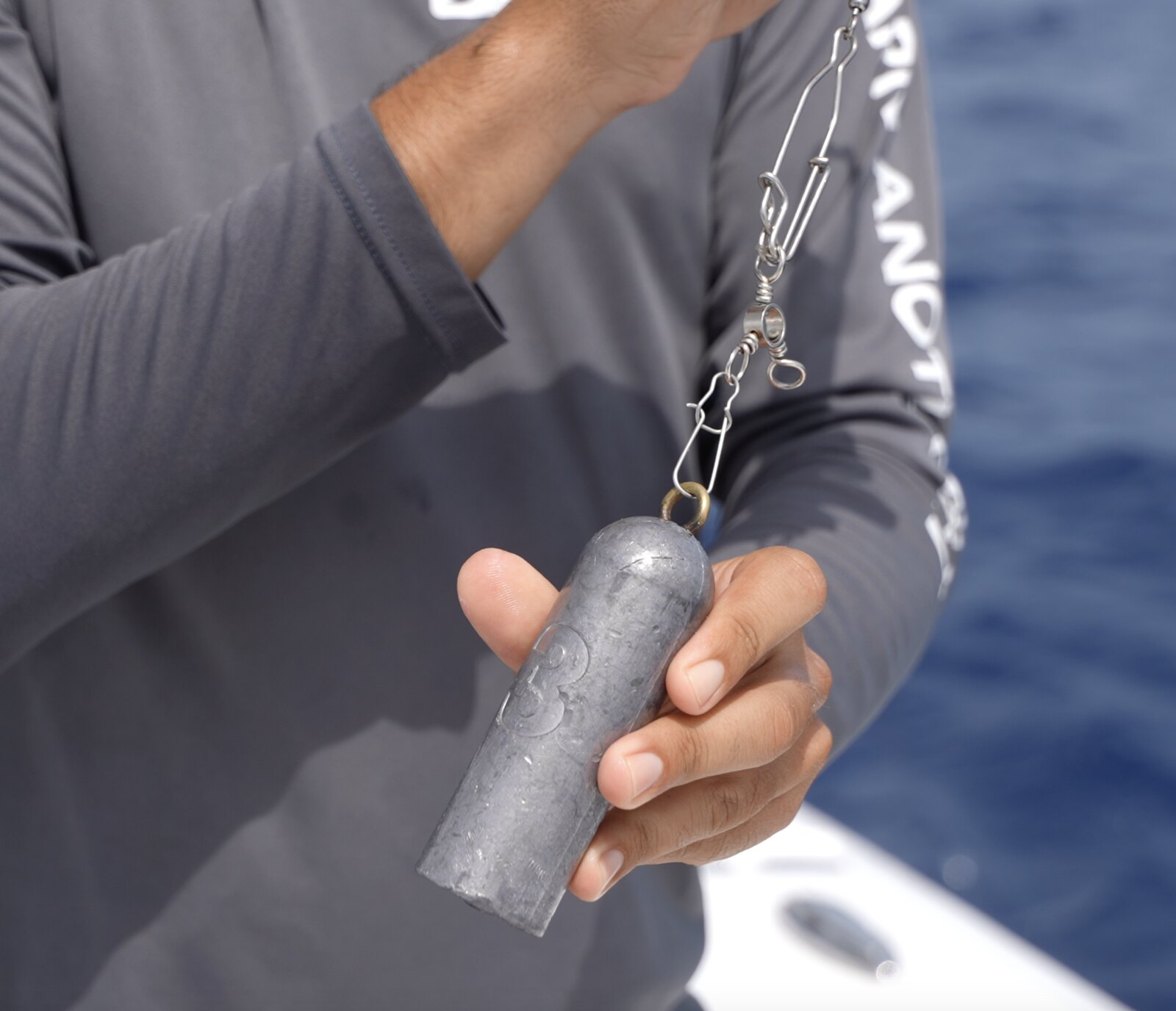
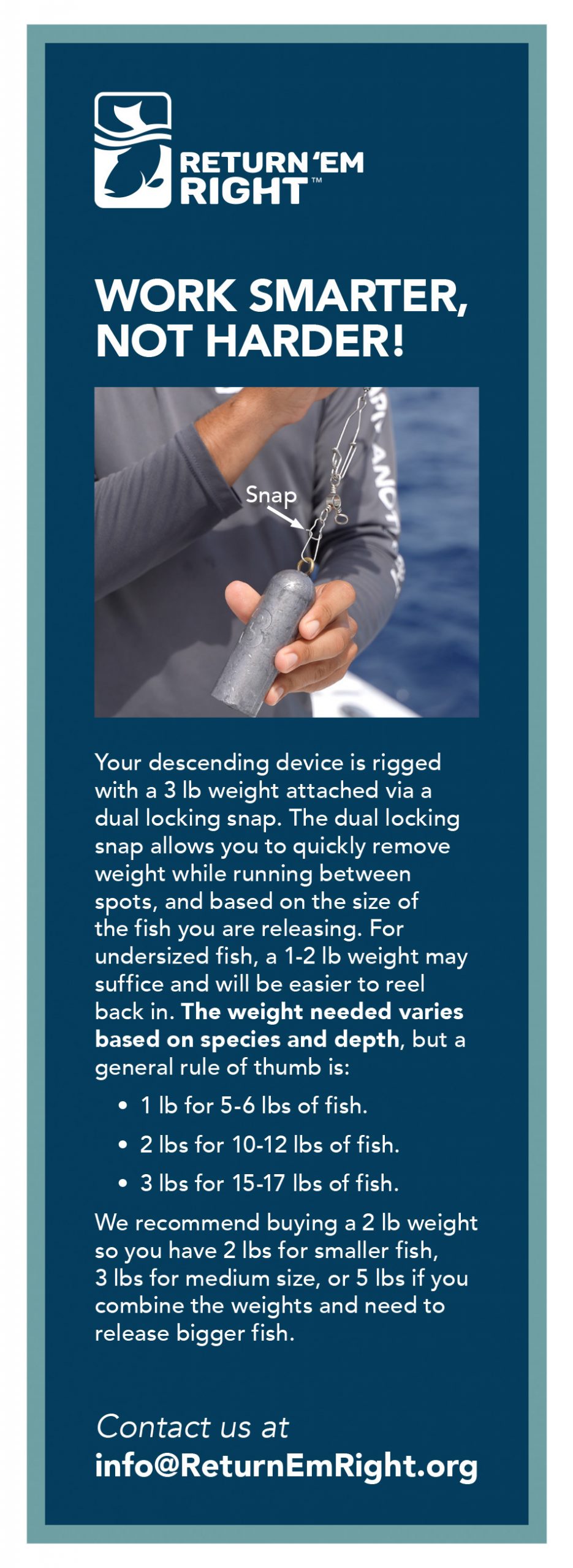
Choosing the right weight is all about the balance of having enough weight to carry the fish down, but not too much that will be exhausting to reel back up (unless you have an electric reel). There is no one-size fits all weight that will work in every situation, but there are ways to be prepared for multiple situations. The three-pound weight that is included in the package will get fish up to ~15 pounds down to depth on most occasions. With that said, it is a lot of weight for undersized grouper and snapper. A 15” red snapper will be flying down to the bottom with a three-pound weight and it will be a lot of unnecessary work to reel up over and over again if you think you will run into a lot of undersized fish. Return ‘Em Right purposely pre-rigged the SeaQualizer to a snap swivel (or a loop knot in older packages) to allow you to quickly change this weight, if needed.
PRO TIP: Start with a two-pound weight but bring your three-pound weight with you. This will allow you to use a two-pound weight, a three pound weight, or you can combine the two and have five-pounds of weight in case you run into a trophy fish that needs to be returned out of season.
Mastery Takes Time
If you have had trouble with your SeaQualizer, don’t stress, you’re not alone. Using any new gear takes practice and these issues can easily be overcome after a few uses. Don’t let some initial struggles dissuade you from using this gear. Just like most aspects of fishing, best uses for the gear is highly situational and may take some creative thinking to get it to work over time. Mastering your gear will not only help improve the survival of your released catch, but will also make you more efficient on the water so you can get back to fishing quicker.
For more information about barotrauma, descending devices, venting tools or other release gear, please visit returnemright.org or take a 15-minute training here.